
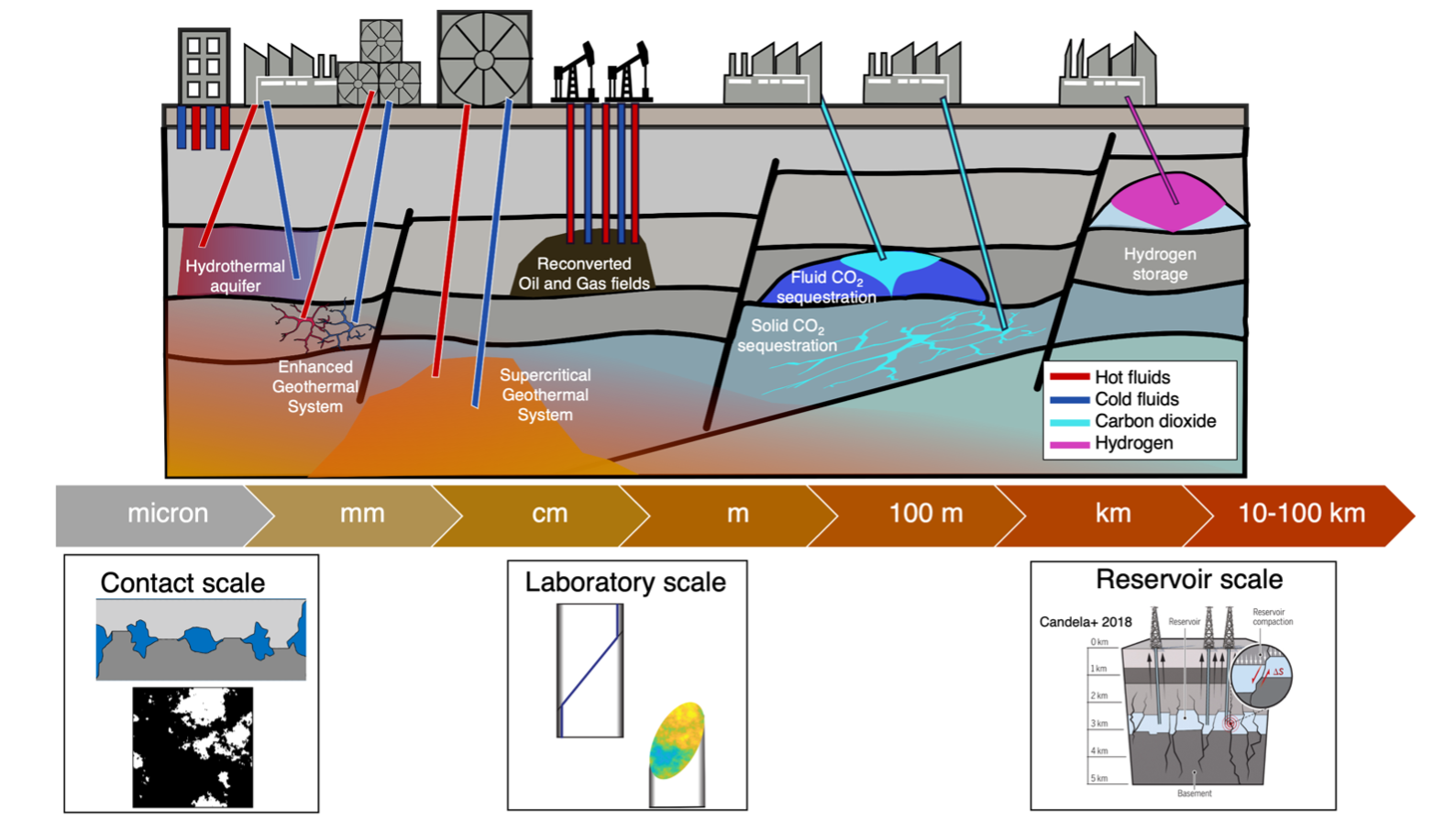
Laboratory investigations into the interplay of fluids and rocks provide a crucial window into the mechanics of earthquakes. These studies recreate the intense pressure and temperature conditions deep within the Earth's crust, allowing for controlled observation of how faults behave. Experiments consistently show that the presence and pressure of fluids can fundamentally alter the earthquake process, from the initial, slow slipping phase that precedes a major rupture to the rapid, damaging slip of the mainshock itself. The injection of pressurized fluids into simulated faults has been shown to trigger a wide spectrum of slip events, ranging from slow, silent creep to abrupt, earthquake-like ruptures, highlighting the critical role of fluid pressure in fault stability. Furthermore, laboratory measurements have been instrumental in understanding the physical mechanisms that control fault weakening during an earthquake. Processes like thermal pressurization, where frictional heating of the fault during slip causes trapped fluids to expand and push the fault apart, have been directly observed and quantified in these experimental settings. By systematically varying conditions like fluid pressure, temperature, and slip rate, laboratory studies continue to unravel the complex ways in which fluids can both instigate and arrest seismic slip, offering invaluable data to refine our models of earthquake behavior.
Understanding how fluids move through deep underground reservoirs is fundamental to harnessing geothermal energy. The complex interplay between the immense pressures exerted by overlying rock and the inherent structure of the rock itself governs the pathways available for fluid flow. In rocks with a layered or foliated fabric, the orientation of these features relative to the surrounding stress field dictates their hydraulic properties; deforming these rocks can either create or destroy permeable pathways. The fluid transport capacity of individual fractures is highly sensitive to the normal stress acting upon them, which tends to close flow paths. Interestingly, modest amounts of shear displacement along these fractures often have a surprisingly small impact on their ability to transmit fluids, a finding that challenges conventional ideas about how to best stimulate these reservoirs to improve their performance.
While pinpointing the exact time and place of an earthquake remains beyond our grasp, significant strides have been made in forecasting seismicity induced by activities in deep reservoirs. By treating large-scale industrial sites, like the Groningen gas field with its seasonal production swings, as natural laboratories, we can study how faults respond to rapid and predictable stress changes. This unique setting allows for the development of sophisticated forecasting models that go beyond simple correlations. By incorporating the physical realities of fault behavior—such as their initial strength and the finite time it takes for an earthquake to initiate—these models can accurately replicate the observed timing and patterns of seismic activity. This approach provides a powerful method to test and refine our understanding, especially in capturing the often delayed and dampened seismic response to short-term operational changes, ultimately improving our ability to assess and manage seismic hazards.
To truly understand the processes occurring miles beneath our feet, it is essential to replicate the crushing pressures and intense heat of the Earth's crust in a controlled laboratory setting. Specialized high-temperature, high-pressure equipment is designed for this exact purpose, allowing us to subject rock samples to the extreme conditions they would naturally experience deep underground. These machines do more than just deform rocks across the full spectrum from brittle shattering to ductile flow; they provide a unique window into their behavior by enabling the simultaneous measurement of critical physical properties. This allows for the observation, in real-time, of how a rock's ability to transmit fluids or conduct seismic waves evolves as it is compressed and heated, making such apparatuses powerful and versatile tools for a broad range of investigations into the fundamental properties of geological materials.